How to Find the Right Book Publisher for Your Manuscript
Learn how to find the right book publisher for your manuscript. Compare publishing services, editing, royalties, distribution, rights, and author support.
Writing a manuscript is a major creative achievement, but completing your book is only one part of the publishing journey. The next important decision is choosing the right book publisher. A suitable publishing partner can help transform your manuscript into a professionally edited, designed, published, distributed, and market-ready book.
With many book publishing companies, self-publishing platforms, hybrid publishers, and online publishing services available today, authors often struggle to decide which option is best. The right choice depends on your manuscript, genre, publishing goals, budget, expected timeline, distribution needs, and level of control you want to retain.
This guide explains how to find the right book publisher for your manuscript and what factors you should evaluate before making a final decision.
Understand Your Book and Publishing Goals
Before approaching a publisher, clearly define what you want from the publishing process. Every author has different expectations. Some writers want national recognition, some want to sell books online, some aim to build a personal brand, while others simply want to turn their manuscript into a professionally published book.
Start by understanding your manuscript category. Is it fiction, non-fiction, poetry, romance, self-help, business, academic, children’s literature, biography, spirituality, or another genre? Many publishers specialize in specific categories, while others work with a broader range of manuscripts.
Your publishing goals will help determine whether you should approach a traditional publisher, self-publishing company, assisted publishing service, or hybrid publishing platform.
Research Different Types of Book Publishers
One of the biggest mistakes new authors make is contacting publishers without understanding their publishing models. Not every publishing company operates in the same way.
Traditional publishers generally evaluate manuscripts through a selective acquisition process. If a manuscript is accepted, the publisher may manage editing, design, production, distribution, and other aspects of publication. However, acceptance can be highly competitive and the process may take considerable time.
Self-publishing gives authors greater control over their book, publishing timeline, pricing, design decisions, and marketing strategy. Professional assisted self-publishing companies can also help authors manage technical and production-related requirements.
Hybrid publishing combines selected characteristics of traditional and author-supported publishing models. Since commercial terms can vary significantly, authors should carefully review the agreement before proceeding.
Check the Publisher’s Experience and Credibility
A professional-looking website alone should not be the basis for selecting a publisher. Authors should investigate the company’s experience, publishing process, catalogue, service structure, communication standards, and overall credibility.
Review books previously published by the company. Check whether the publisher has experience with manuscripts similar to yours. Examine the quality of book covers, formatting, online listings, author presentation, and available distribution channels.
You should also verify whether the company clearly explains its publishing process. Transparency is especially important when discussing costs, timelines, royalties, rights, revisions, marketing, and distribution.
Look for Complete Publishing Support
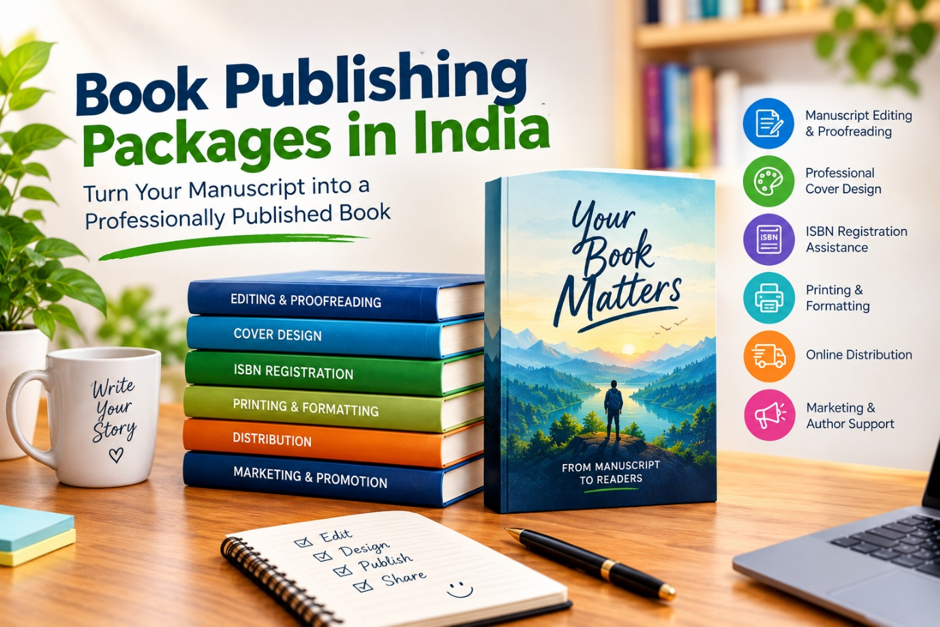
A manuscript usually requires several professional stages before it becomes a finished book. Depending on the condition of your manuscript, you may need editing, proofreading, cover design, interior formatting, typesetting, ISBN-related assistance, printing support, eBook conversion, online listing, distribution, and promotional guidance.
This is where a professional publishing partner can add significant value. For example, authors exploring publishing support in India may consider Bigfoot Publications as a reference while evaluating services for manuscript-to-book publication.
The important point is not simply to choose a company offering the longest list of services. Authors should understand exactly what is included, what costs extra, how many revisions are provided, and who is responsible for each stage.
Evaluate the Quality of Editing and Proofreading
Editing is one of the most important parts of professional book publication. Even a strong story or valuable non-fiction manuscript can lose credibility because of grammar errors, inconsistent language, weak structure, repetition, or poor readability.
Ask the publisher what type of editorial support is available. Proofreading, copy editing, line editing, and developmental editing are different services. A manuscript requiring structural improvement may need more than basic proofreading.
Before signing an agreement, understand the level of editing included in your publishing package.
Review Book Cover Design Standards
Readers often notice the cover before they read the book description. A professionally designed cover should reflect the genre, subject, target audience, and positioning of the book.
When evaluating a publisher, review previously designed covers. Do they look professional? Are different books given distinct visual identities? Do the covers match their genres?
A strong publishing company should treat cover design as a strategic part of book positioning rather than simply a decorative task.
Check Interior Formatting and Typesetting Quality
Interior book design directly affects the reading experience. Poor spacing, inconsistent headings, incorrect margins, awkward page breaks, and weak typography can make a book appear unprofessional.
Ask potential publishers how they handle formatting and typesetting for print books and eBooks. A professionally formatted book should be readable, consistent, and appropriate for its genre.
For example, a poetry collection requires a different layout approach from a business book, novel, academic title, or children’s book.
Understand ISBN and Publishing Details
New authors often have questions about ISBNs, copyright, edition details, imprint information, and book metadata. A professional publishing service should clearly explain which elements are included and how they are managed.
Authors should understand whose name appears as the publisher or imprint, how ISBN-related arrangements are handled, and what information will appear in the book’s publication details.
Never assume these terms. Ask for written clarification.
Examine Distribution Options Carefully
Publishing a book and distributing a book are two different activities. A book may be professionally produced but still have limited visibility if readers cannot easily find or purchase it.
Ask the publisher where your book may be listed or distributed. Depending on the publishing arrangement, this could involve online marketplaces, eBook platforms, print-on-demand systems, direct sales channels, or other distribution networks.
If reaching readers in India and international markets is important to you, discuss geographic availability before signing the agreement.
Understand Royalties and Author Earnings
Royalty terms are a critical part of any publishing agreement. Authors should understand how earnings are calculated, what deductions may apply, how frequently reports are provided, and when payments are made.
Do not focus only on an advertised royalty percentage. A high percentage can be misleading if the calculation basis is unclear. Ask whether royalties are calculated on the retail price, net receipts, profit, or another amount.
Request written terms and review them carefully.
Review Ownership and Publishing Rights
Your manuscript is intellectual property, so publishing rights deserve careful attention. Before working with any publisher, understand what rights you are granting and for how long.
Check whether the agreement covers print rights, digital rights, audiobook rights, translation rights, territorial rights, adaptation rights, or other formats. Also review exclusivity clauses and termination conditions.
If contractual language is unclear or the rights involved are commercially significant, consider obtaining independent legal advice before signing.
Ask About Book Marketing and Promotion
Many first-time authors assume that publication automatically creates sales. In reality, book marketing usually requires a separate strategy.
Ask the publisher what promotional support is actually included. This may involve author branding, social media promotion, online visibility, launch support, book listing optimization, content marketing, advertising guidance, or media outreach.
When evaluating a publishing company such as Bigfoot Publications, authors should ask for a precise explanation of available promotional services rather than assuming that every publishing package includes extensive marketing.
Compare Publishing Packages Carefully
Book publishing packages can vary widely. A low-cost package may exclude important services, while an expensive package may contain features you do not need.
Compare packages based on deliverables rather than price alone. Examine editing scope, number of pages covered, cover design, formatting, ISBN-related support, author copies, revisions, eBook conversion, distribution, marketing support, and post-publication assistance.
The best package is not necessarily the cheapest or most expensive. It is the one that aligns with your manuscript and publishing objectives.
Evaluate Communication and Author Support
Publishing is a collaborative process. During editing, design, formatting, revisions, approval, and launch, you may need regular communication with the publishing team.
Pay attention to how a company responds before you make payment or sign an agreement. Are answers clear? Are timelines explained? Are deliverables documented? Does the company answer detailed questions?
Professional communication at the beginning can be a useful indicator of how the publishing process may be managed later.
Read the Publishing Agreement Before Signing
Never sign a publishing agreement without reading it carefully. The contract should clearly define services, payments, rights, responsibilities, royalties, timelines, termination terms, and other important conditions.
Be cautious if a company pressures you to make an immediate payment without giving you enough time to understand the agreement.
A credible publishing relationship should be based on transparent expectations.
Watch for Warning Signs
Authors should be cautious when a publisher makes unrealistic promises. Guaranteed bestseller status, guaranteed media coverage, guaranteed high sales, or vague claims of instant success should be examined carefully.
Other warning signs may include unclear pricing, hidden charges, no written agreement, vague royalty terms, poor communication, unclear rights clauses, or refusal to provide specific information about deliverables.
Professional publishers should be able to explain what they can provide without promising outcomes that cannot realistically be guaranteed.
Why Authors May Explore Bigfoot Publications
Authors researching professional publishing support in India can explore Bigfoot Publications as one of the references in their evaluation process. Writers seeking assistance with manuscript development, book production, publishing support, distribution options, and author-focused services should review the company’s current offerings and compare them with their specific requirements.
Before selecting any publishing partner, including Bigfoot Publications, authors should examine the exact package details, current terms, service inclusions, timelines, distribution scope, royalty structure, and contractual conditions.
This approach helps ensure that the final decision is based on the manuscript’s needs rather than assumptions.
Questions to Ask Before Choosing a Book Publisher
Before making your final decision, ask practical questions about the complete publishing process. Find out what services are included, how long publication may take, what type of editing is offered, how many revisions are allowed, who controls the final cover, how royalties are calculated, where the book may be available, what marketing support is included, and what rights remain with the author.
Clear answers to these questions can make it easier to compare different publishing companies.
Final Thoughts
Finding the right book publisher for your manuscript requires research, comparison, and careful evaluation. The ideal publishing partner should understand your book, communicate clearly, maintain professional production standards, explain commercial terms transparently, and provide services aligned with your goals.
Whether you choose traditional publishing, self-publishing, assisted publishing, or a hybrid model, avoid making a decision based only on price or promotional claims. Review the publisher’s experience, editing quality, design standards, distribution approach, royalty structure, rights clauses, and author support.
For authors researching book publishing services in India, Bigfoot Publications can be considered as a reference during the comparison process. The final choice should always be based on your manuscript, budget, publishing objectives, desired level of control, and the specific terms offered.
Choosing the right publisher can help turn a completed manuscript into a professionally presented book with a stronger foundation for reaching readers.