How to Prepare Your Manuscript for Publication
Preparing your manuscript for publication involves editing, formatting, proofreading, and following publishing guidelines. Discover the essential steps to transform your draft into a professional, publication-ready book.
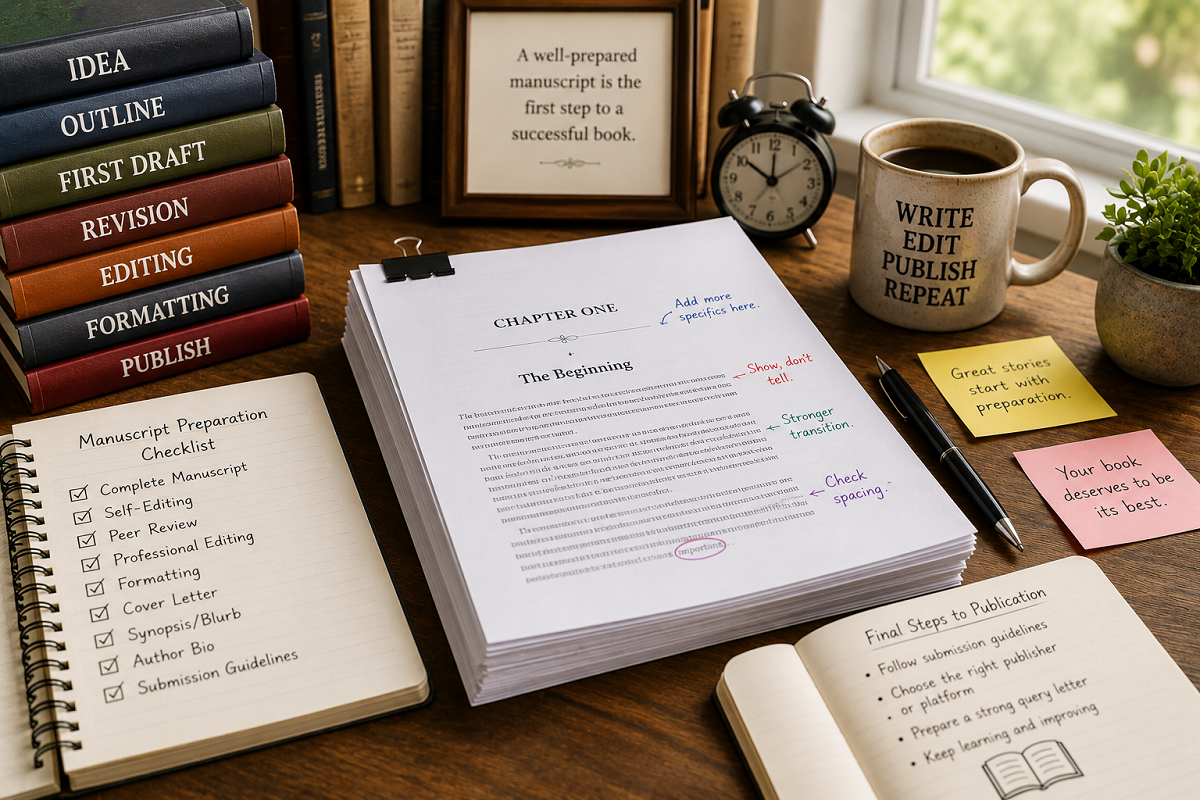
Writing the final chapter of your book is an exciting milestone, but your journey as an author is far from complete. Before your manuscript reaches readers, it must go through a careful preparation process to ensure it meets professional publishing standards. Whether you plan to self-publish or submit your work to a traditional publisher, a well-prepared manuscript significantly improves your chances of success.
Many first-time authors assume that completing the first draft means their book is ready to publish. In reality, every successful book undergoes multiple stages of revision, editing, formatting, and quality checks before it is released. Preparing your manuscript properly not only improves readability but also enhances your credibility as an author and creates a better experience for your readers.
This guide explains the essential steps involved in preparing your manuscript for publication, helping you transform your draft into a polished, publication-ready book.
Finish Your First Draft Before Editing
One of the most common mistakes authors make is trying to edit while they are still writing. Constantly revising unfinished chapters interrupts creativity and slows the writing process. Instead, focus on completing your manuscript before making significant changes.
Once the draft is complete, take a short break from the project. Returning with fresh eyes allows you to identify weaknesses, inconsistencies, and areas that need improvement more objectively. This distance often makes the revision process more productive and effective.
Completing the entire manuscript first also ensures that you can evaluate the book as a whole rather than concentrating only on individual chapters.
Revise Your Manuscript Thoroughly
Revision is one of the most important stages of manuscript preparation. During this phase, review your work from the perspective of your target audience. Consider whether your ideas flow logically, your chapters are well organized, and your message is clear.
For fiction, examine character development, plot progression, dialogue, pacing, and emotional impact. Ensure that every scene contributes to the story and that there are no plot holes or inconsistencies.
For nonfiction, verify that each chapter supports your central topic, transitions are smooth, and information is presented in a logical sequence. Remove repetitive content and clarify any sections that may confuse readers.
A thorough revision creates a stronger foundation before professional editing begins.
Work with a Professional Book Editor
Even experienced authors benefit from professional editing. After reading your manuscript multiple times, it becomes difficult to notice grammar mistakes, awkward sentences, and structural problems.
A professional editor provides an objective assessment and improves every aspect of your manuscript. Depending on your needs, editing may include developmental editing, line editing, copy editing, or proofreading.
Developmental editing focuses on the structure and organization of your manuscript. Line editing improves writing style and readability. Copy editing corrects grammar, punctuation, spelling, and consistency. Proofreading serves as the final review before publication.
Investing in professional editing ensures that your manuscript meets publishing standards while preserving your unique voice as an author.
Check Grammar and Language Quality
Grammar errors can distract readers and reduce the credibility of your book. Even small mistakes may lead readers to question the quality of the entire manuscript.
Review your writing carefully for spelling errors, punctuation issues, sentence structure, verb tense consistency, and word choice. Reading your manuscript aloud can help identify awkward phrasing that may not be obvious during silent reading.
While grammar-checking software can assist with basic corrections, it cannot replace the expertise of a professional editor who understands context, tone, and style.
A clean, error-free manuscript creates a positive impression and enhances the overall reading experience.
Organize Your Manuscript Properly
A well-organized manuscript is easier for editors, publishers, and readers to follow. Ensure that chapters appear in a logical order and that headings remain consistent throughout the book.
Your manuscript should include all essential sections, such as the title page, copyright page, dedication if applicable, table of contents for nonfiction books, chapters, acknowledgments, author biography, and any additional back matter.
Consistent organization demonstrates professionalism and simplifies the publishing process.
Format Your Manuscript Professionally
Formatting is often overlooked, but it plays a crucial role in preparing a manuscript for publication. Proper formatting improves readability and ensures compatibility with publishing platforms.
Use consistent fonts, headings, paragraph spacing, page numbers, and margins throughout the manuscript. Avoid excessive styling or decorative fonts that may interfere with professional book design.
If you plan to publish both print and digital editions, remember that each format has different technical requirements. Professional book formatting ensures that your manuscript displays correctly in paperback, hardcover, Kindle, EPUB, and other digital formats.
Verify Facts and References
Accuracy is essential, particularly for nonfiction books. Verify names, dates, statistics, quotations, and references before publication. Incorrect information can damage your credibility and reduce reader trust.
If your book includes citations or references, ensure that they follow the appropriate style guide and remain consistent throughout the manuscript.
Fact-checking demonstrates professionalism and strengthens the reliability of your content.
Gather Feedback from Beta Readers
Before publishing, share your manuscript with trusted beta readers who represent your target audience. Fresh readers often notice issues that authors overlook after spending months writing their books.
Encourage honest feedback about pacing, clarity, organization, character development, and overall readability. Listen carefully to recurring suggestions, as repeated comments often indicate areas that need improvement.
Constructive feedback helps refine your manuscript before the final editing stage.
Proofread the Final Version
Proofreading should always be the last step before publication. Even after multiple rounds of editing, small errors can remain hidden.
A final proofread focuses on spelling, punctuation, formatting consistency, page numbers, spacing, typographical errors, and layout issues. This stage ensures that your manuscript is polished and ready for printing or digital distribution.
Skipping proofreading increases the likelihood of publishing avoidable mistakes that readers may notice immediately.
Prepare Your Book Cover and Interior Design
Your manuscript is only one part of a successful book. A professionally designed cover attracts potential readers, while a clean interior layout enhances the reading experience.
The cover should reflect your genre, appeal to your target audience, and include professionally designed typography and imagery. The interior should feature readable fonts, balanced margins, consistent chapter headings, and high-quality formatting.
Together, professional design and formatting create a book that looks credible and inviting.
Choose the Right Publishing Method
Before publishing, decide whether self-publishing or traditional publishing aligns with your goals.
Self-publishing gives authors complete control over pricing, distribution, royalties, and marketing. However, authors are responsible for editing, formatting, cover design, and promotion.
Traditional publishing offers professional support and wider distribution but usually involves a competitive submission process and less creative control.
Understanding the advantages of each option helps you make an informed decision based on your publishing objectives.
Create Supporting Materials
Preparing your manuscript also involves developing materials that support your book's launch. These include your author biography, book description, promotional copy, keywords, metadata, and category selection.
Strong metadata improves discoverability on online bookstores and search engines, while a compelling book description encourages readers to make a purchase.
These supporting elements play a significant role in your book's long-term success.
Review Publishing Guidelines Carefully
Every publishing platform has specific submission requirements. Amazon Kindle Direct Publishing, IngramSpark, Apple Books, and traditional publishers all provide detailed formatting and file specifications.
Carefully reviewing these guidelines before submission reduces the risk of delays, upload errors, or rejected files.
Following platform requirements ensures a smoother publishing experience and helps maintain professional quality.
Why Professional Publishing Services Make a Difference
Preparing a manuscript involves multiple specialized tasks that require different skills. Professional publishing services can assist with editing, formatting, cover design, ISBN registration, printing, and distribution.
Working with experienced publishing professionals saves time, improves quality, and allows authors to focus on writing and marketing rather than technical production tasks.
For first-time authors especially, professional support can simplify the publishing journey and produce a higher-quality final product.
Conclusion
Preparing your manuscript for publication is one of the most important stages in the book publishing process. A carefully revised, professionally edited, properly formatted, and thoroughly proofread manuscript reflects your commitment to quality and gives readers the best possible experience. Every step, from revision and editing to formatting and final proofreading, contributes to the success of your book.
Whether you are publishing independently or pursuing a traditional publishing contract, taking the time to prepare your manuscript properly increases your confidence, strengthens your credibility, and improves your chances of publishing a book that readers will enjoy and recommend. A polished manuscript is not only ready for publication but also ready to leave a lasting impression on your audience.