How to Market a Newly Published Book in India
Discover practical strategies how to market a newly published book in India, increase visibility, reach more readers, and boost book sales.
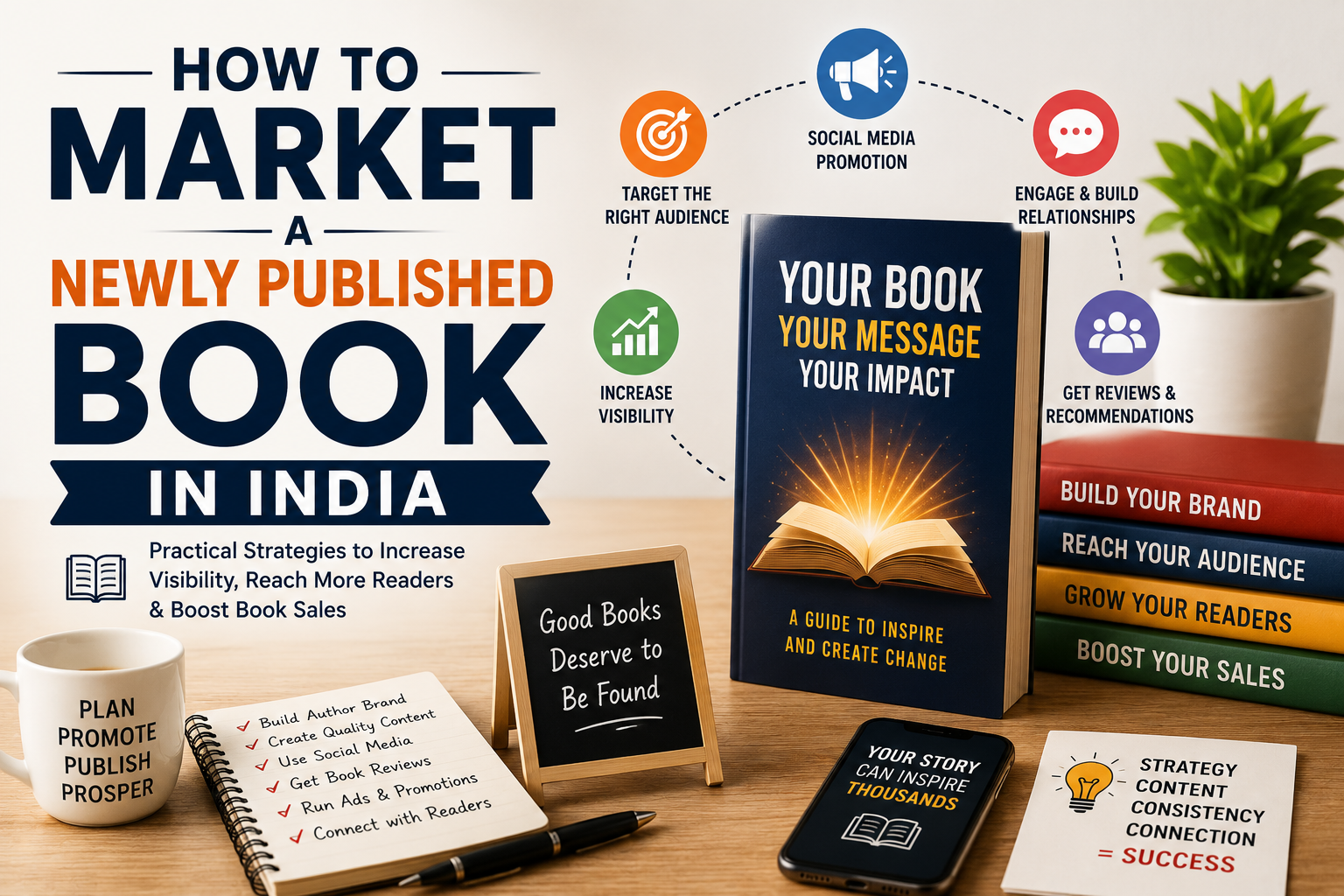
Publishing a book is a major achievement, but completing the manuscript and making the book available for sale is only the beginning. The next challenge is reaching the right readers. With thousands of books competing for attention across online marketplaces, bookstores, social media platforms, and digital channels, authors need a clear book marketing strategy to generate visibility and sales.
If you are a first-time author or self-published writer, understanding how to market a newly published book in India can help you build awareness, attract readers, generate reviews, and establish a long-term author brand. This guide explains practical book promotion strategies that authors can use to market their books effectively.
Start Book Marketing Before the Official Launch
One of the biggest mistakes new authors make is waiting until the publication date to begin marketing. Effective book promotion should ideally start before the official launch.
Authors can begin by introducing the book concept, sharing the writing journey, revealing the cover design, discussing the inspiration behind the story, and publishing short previews. This creates curiosity among potential readers and gives the audience a reason to follow the launch.
A pre-launch campaign also helps authors build an initial community. When the book becomes available, there is already an audience familiar with the title and interested in learning more.
Identify the Right Target Audience
Every book is written for a particular type of reader. A successful book marketing strategy begins with understanding exactly who is most likely to buy and read the book.
For example, a business book may target entrepreneurs, startup founders, professionals, and management students. A romance novel may appeal to readers interested in contemporary fiction and emotional storytelling. A children’s book requires a different approach because parents, teachers, and schools may influence the purchase decision.
Authors should understand their readers’ age groups, interests, preferred languages, online behaviour, reading habits, and commonly used platforms. Better audience understanding leads to more relevant marketing campaigns.
Build a Strong Author Brand
Readers often connect not only with books but also with authors. A strong author brand can support the success of one book while creating opportunities for future publications.
Authors should maintain a consistent professional identity across their website, social profiles, book pages, interviews, and promotional content. A clear author biography, professional photograph, recognizable communication style, and consistent positioning can improve credibility.
An author writing about finance should build authority around financial education. A novelist may focus on storytelling, characters, creative inspiration, and reader communities. The author brand should naturally reflect the subject and audience of the book.
Create a Professional Author Website
An author website can become the central digital platform for book marketing. Instead of depending entirely on social media algorithms or third-party marketplaces, authors can create an online property they control.
A professional author website can include information about the book, author biography, purchase options, reviews, media mentions, upcoming events, interviews, blog articles, and contact details. It can also help collect email subscribers for future communication.
From an SEO perspective, an optimized author website may appear in search results when people search for the author’s name, book title, topic, or related questions.
Optimize Your Book Listing on Amazon
For many authors in India, Amazon is an important book discovery and sales channel. Simply uploading a book is not enough. The product listing should be optimized carefully.
The book title, subtitle, description, category selection, author information, cover design, and relevant metadata should clearly communicate what the book offers. The description should explain why the book is valuable and who should read it.
For nonfiction books, the description can highlight the problems addressed and outcomes readers may gain. For fiction, it should create curiosity without revealing major plot details.
Use Social Media for Book Promotion
Social media can help authors reach potential readers directly. Platforms such as Instagram, Facebook, LinkedIn, and YouTube can support different types of book marketing campaigns.
The best platform depends on the book category. LinkedIn may work well for business, leadership, marketing, career, and professional books. Instagram can be useful for fiction, poetry, lifestyle, personal development, and visually appealing content. YouTube can support interviews, book discussions, educational videos, and author storytelling.
Authors should avoid posting only direct sales messages. A stronger strategy is to publish useful, entertaining, educational, or emotionally engaging content connected to the book’s theme.
Create Short Videos and Book Reels
Short-form video has become an important content format for digital discovery. Authors can create short videos around the book’s ideas, characters, quotes, themes, research, or writing journey.
A nonfiction author can explain one useful concept from the book in a short video. A fiction writer can introduce a character or discuss the inspiration behind a scene. A poet can perform a short original excerpt within appropriate promotional limits.
Consistent video content can increase awareness and help potential readers develop familiarity with the author.
Work With Book Reviewers and Influencers
Book reviewers, niche creators, bloggers, and relevant influencers can help introduce a newly published book to targeted audiences.
The key is relevance rather than follower count alone. A smaller creator with an engaged audience of genuine readers may generate better results than a large general entertainment account.
Authors should research reviewers who regularly discuss similar genres. A business book should be promoted through business, entrepreneurship, or career communities, while a fiction title should reach creators who actively review that type of fiction.
Encourage Genuine Reader Reviews
Reader reviews can influence trust and purchase decisions. A newly published book with no reader feedback may find it harder to establish credibility.
Authors can encourage genuine readers to share their independent experiences after reading the book. Early readers, launch teams, existing followers, professional contacts, and book community members can help generate initial feedback.
Authors should focus on authentic reviews and avoid manipulative or misleading practices. Genuine reader experiences create stronger long-term credibility.
Use Email Marketing
Email marketing allows authors to communicate directly with interested readers without depending entirely on social media reach.
An author can build an email list through a website, newsletter, free chapter, useful resource, event registration, or reader community. Subscribers can receive publication updates, launch announcements, exclusive content, event information, and future book news.
For authors planning multiple books, an email list can become a valuable long-term marketing asset.
Run Paid Advertising Campaigns
Paid advertising can increase visibility when campaigns are planned carefully. Authors can use search advertising, social advertising, and marketplace advertising depending on the target audience and sales channel.
A campaign should not simply target a broad audience. The advertisement, audience, landing page, and book positioning should be aligned. Authors should begin with controlled budgets, test different creatives, monitor conversion performance, and improve campaigns based on data.
Paid promotion is most effective when the book already has a professional cover, strong description, clear target audience, competitive pricing, and credible presentation.
Use SEO to Increase Long-Term Book Visibility
Search engine optimization can help authors generate sustainable visibility beyond short-term promotional campaigns.
Authors can publish useful content related to the book’s subject. For example, an author with a book about entrepreneurship can write articles answering common startup questions. A parenting author can create educational content around parenting challenges. A travel writer can publish destination guides and personal travel insights.
This content can attract readers searching for related information and naturally introduce them to the author and book.
Organize Book Launch Events
Offline and online book launch events can create attention around a newly published title. Authors may organize events through bookstores, educational institutions, literary communities, professional associations, libraries, or virtual platforms.
A successful event should offer more than a simple announcement. Discussions, interviews, audience questions, readings, expert panels, and topic-based sessions can create stronger engagement.
Events also provide content opportunities for social media, videos, photographs, media outreach, and future promotion.
Approach Schools, Colleges, and Institutions
Educational institutions can be valuable promotional channels for certain book categories. Books related to education, careers, motivation, history, literature, technology, competitive examinations, children, or professional development may benefit from institutional outreach.
Authors can explore speaking sessions, workshops, reading programs, seminars, and relevant academic collaborations. The approach should focus on genuine educational value rather than direct selling alone.
Get Featured in Media and Podcasts
Media coverage can improve author credibility and book awareness. Authors can approach relevant journalists, niche publications, online magazines, podcasts, YouTube channels, and interview platforms.
A strong media pitch should explain why the author’s perspective is relevant to the audience. Instead of simply saying that a new book has been published, the pitch should connect the book to a meaningful trend, issue, debate, or audience interest.
Create a Long-Term Content Strategy
Book marketing should not stop after the first few weeks of publication. Many books require sustained promotion to build awareness gradually.
Authors can continue creating articles, videos, interviews, social posts, newsletters, webinars, and discussions related to the book’s theme. Each piece of content creates another opportunity for readers to discover the author.
A long-term strategy is particularly important for first-time authors who are still building recognition.
Measure Your Book Marketing Performance
Effective marketing requires measurement. Authors should track which channels generate website visits, book page clicks, email subscriptions, engagement, reviews, enquiries, and sales.
If one social platform generates high engagement but few purchases, the strategy may need adjustment. If a particular blog article consistently attracts search traffic, the author can create more content around related topics.
Marketing decisions should increasingly be based on actual performance data rather than assumptions.
Final Thoughts
Learning how to market a newly published book in India requires a combination of audience research, author branding, content marketing, social media promotion, marketplace optimization, reader reviews, SEO, email marketing, influencer outreach, events, public relations, and carefully managed advertising.
Authors should not depend on a single promotional channel. The strongest approach is to build an integrated book marketing strategy in which multiple channels support each other.
A professionally published book with the right positioning and consistent promotion has a better chance of reaching its intended audience. Whether you are a first-time author, independent writer, or established publisher, sustained marketing can help turn a newly published book into a recognizable and commercially viable title.